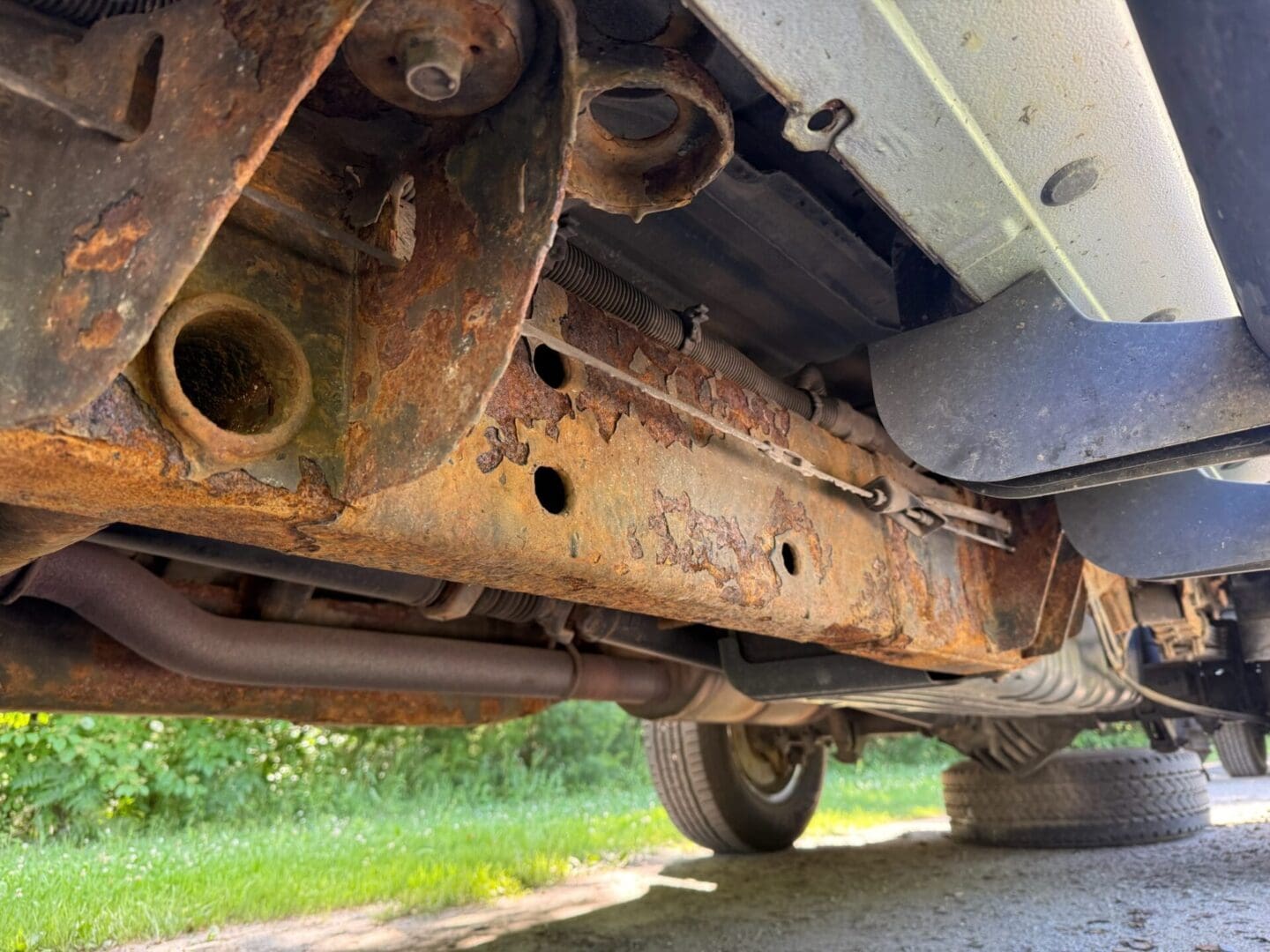
You’ve seen it. A truck in a parking lot with the wheel wells eaten through. A frame so rotted it flexes when you jack it up. Brake lines so corroded they fail on a back road in February. That’s not bad luck. That’s Maine winters doing exactly what they’re designed to do. And if your vehicle isn’t undercoated, it’s happening to yours right now — slowly, invisibly, underneath where you can’t see it. Here’s what’s actually going on.
The Chemistry of Maine Road Salt
Maine roads don’t just get wet in winter. They get saturated with sodium chloride, and that changes everything about how metal behaves.
Plain water is a lousy conductor. But dissolve road salt into it and you’ve got an electrolyte solution, the same basic chemistry as a battery. Metal submerged in that solution doesn’t just sit there. It corrodes through an electrochemical reaction called oxidation. Steel gives up electrons to the saltwater. Iron ions migrate through the solution. Rust forms.
The reaction accelerates with temperature. The closer to freezing, the slower it moves, but Maine roads don’t stay near freezing. They swing. Forty degrees on a January afternoon. Down to ten overnight. Back up to thirty-five the next day. Every cycle draws that salt solution deeper into seams, joints, and hollow sections, places where it sits and works uninterrupted.
That’s not a weather condition. That’s a corrosion mechanism. And it runs all winter.
What’s Actually Getting Destroyed
Most people think about surface rust, the kind you can see on a bumper or a door edge. That’s cosmetic. Annoying, but cosmetic. What Maine winters attack is structural. Here’s where the damage actually happens:
Frame Members
Your frame is the backbone of the truck. It’s a hollow steel structure, which means it’s collecting moisture and salt on the inside as well as the outside. Rust works from both directions. By the time you see bubbling paint on the outside of a frame rail, the inside has often been corroding for years. Severe frame rot means one thing: the truck is done. It can’t be safely repaired at any reasonable cost.
Break Lines
Brake lines run the full length of the undercarriage, exposed to everything the road throws up. They’re typically made from steel with a thin coating, enough to survive normal conditions, not enough to survive a Maine winter without help. Corroded brake lines develop pinhole leaks. Pinhole leaks become failures. This isn’t a “fix it later” problem.
Wheel Wells and Rocker Panels
These are the first areas to show visible damage because they catch the most direct road spray. Salt-laden slush packs into the seams and stays wet long after the roads dry out. Once rust gets a foothold in a rocker panel, it spreads inward. Replacing rocker panels is expensive. Letting them go is worse, they’re structural on most modern vehicles.
Fuel and Transmission Lines
Same exposure as brake lines. Same story. The undercarriage is a network of metal lines that nobody looks at until something goes wrong.
The Freeze-Thaw Problem Is Specific to Here
Southern Maine and New Hampshire get a particular kind of winter that’s harder on vehicles than regions with consistently cold temperatures.
In northern Vermont or Canada, it gets cold and stays cold. Salt application is lower. Roads freeze solid and stay that way. The corrosion cycle doesn’t run as hot because the temperatures don’t swing as much.
Our winters are different. We get the melt. We get rain on top of snow. We get 40-degree days in January followed by single digits at night. That cycling is what drives salt into metal. It’s what keeps the corrosion reaction active across a longer portion of the year, often straight through into April, when spring rain keeps reactivating the salt already packed into every crevice.
Why Fluid Film Works and Why It’s What We Use
There are a lot of undercoating products on the market. Rubberized undercoating. Oil-based sprays. Wax-based formulas. They’re not all the same.
We use Fluid Film, it’s a lanolin-based product, refined from sheep’s wool grease, and it behaves differently from petroleum-based alternatives in one critical way: it stays active.
Rubberized coatings dry and cure. Once they cure, they’re a barrier — and barriers can crack, chip, and let moisture in behind them. When that happens, the rust is sealed in rather than stopped.
Fluid Film doesn’t cure. It stays soft and self-healing, continuing to creep into seams and joints over time. It’s been the industry standard for over 60 years for a reason. It’s used on military equipment, commercial fishing vessels, and farm machinery — environments where rust protection isn’t optional.
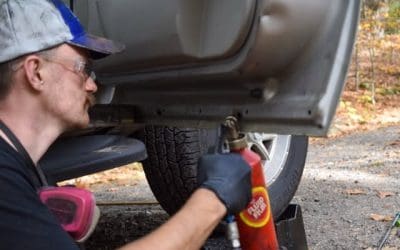
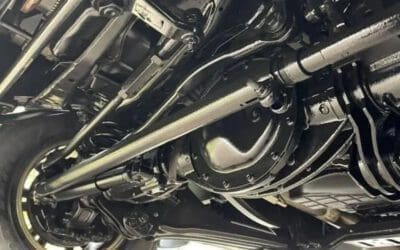
We apply it to the full undercarriage: frame rails, suspension components, brake and fuel lines, wheel wells, floor pan. Everything that lives underneath and takes the hit all winter.
“My Truck Already Has Some Rust — Is It Too Late?”
This is the most common question we get. And the honest answer is: probably not.
Surface rust and light scale rust, the kind you find on most vehicles in Maine that haven’t been treated, can be stabilized. Fluid Film penetrates existing rust and slows the reaction. It won’t undo damage that’s already done, but it stops the progression and protects the metal that’s still intact.
The exception is advanced structural rust: compromised frame members, perforated rocker panels, lines that are already failing. At that point, you’re looking at repair first, protection after.
That’s exactly why the sooner you treat, the better. Not because we’re trying to sell you something, because the math is real. An undercoating appointment costs a fraction of a single body panel replacement, and a fraction of a percent of what a frame repair costs.
Most trucks we treat in Maine should have been treated two winters ago. That’s not a sales pitch. It’s what we see every week.
The Mobile Part Matters
We get asked occasionally why we’re mobile-only. The answer is pretty simple.
If getting undercoating means dropping your truck off at a shop, arranging a ride, and burning half a day, most people put it off. They mean to do it. They just don’t get around to it until there’s a problem.
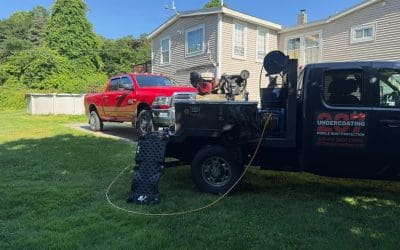
We come to you. Your driveway, your workplace, wherever the truck is. You don’t reschedule your day. The truck doesn’t sit in a lot waiting. It gets done when it should get done, before another winter starts working on it.
Book Your Appointment
If your truck is heading into another Maine winter unprotected, this is the call to make.
We serve all of Southern Maine and New Hampshire. Appointments are straightforward to schedule, pricing is upfront on the site, and we’ll tell you honestly what we find when we get under your vehicle.
Book your mobile appointment at 207Undercoating.com or call us at 207-910-RUST.
Don’t wait until you can see the rust. By then, it’s already been working for a long time.